Claude Fable 5: Anthropic launches its most powerful model with a seatbelt
Same model, two names, two access levels. What lies behind Fable 5 and Mythos 5, what it costs, and what developers need to keep in mind. Published on 9 June 2026 • AI translated

The backstory is remarkable. In April, Anthropic introduced Claude Mythos Preview and decided against releasing it publicly. The reason: the model found and exploited zero-day vulnerabilities across all major operating systems and browsers, including a 27-year-old bug in OpenBSD.
Instead, Anthropic launched Project Glasswing. Around 50 partners, including Amazon, Apple, Google, Microsoft, and JPMorganChase, used Mythos for defensive cybersecurity and uncovered more than ten thousand high- or critical-severity vulnerabilities. In early June, the program was expanded to roughly 150 organizations across more than fifteen countries.
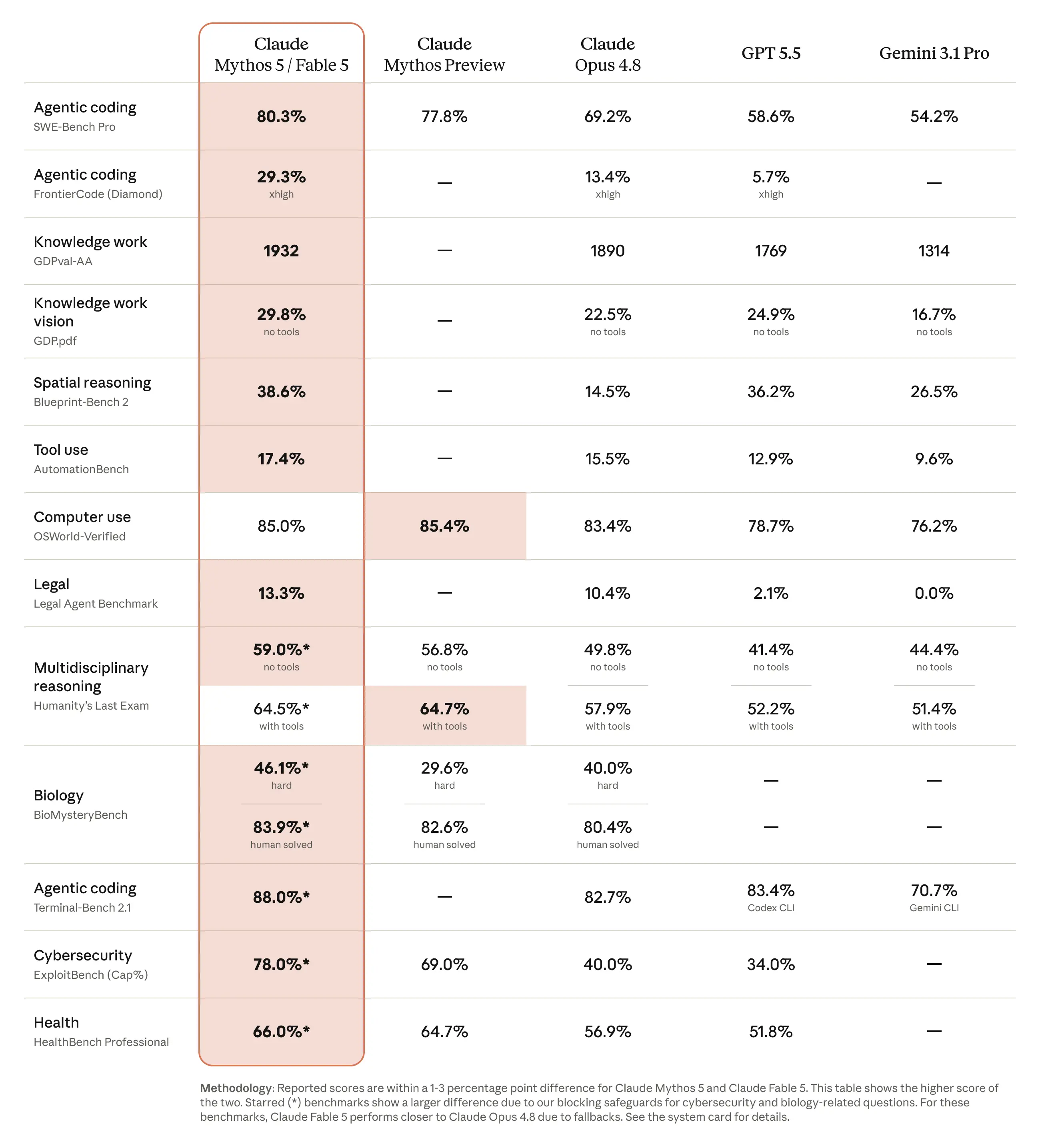
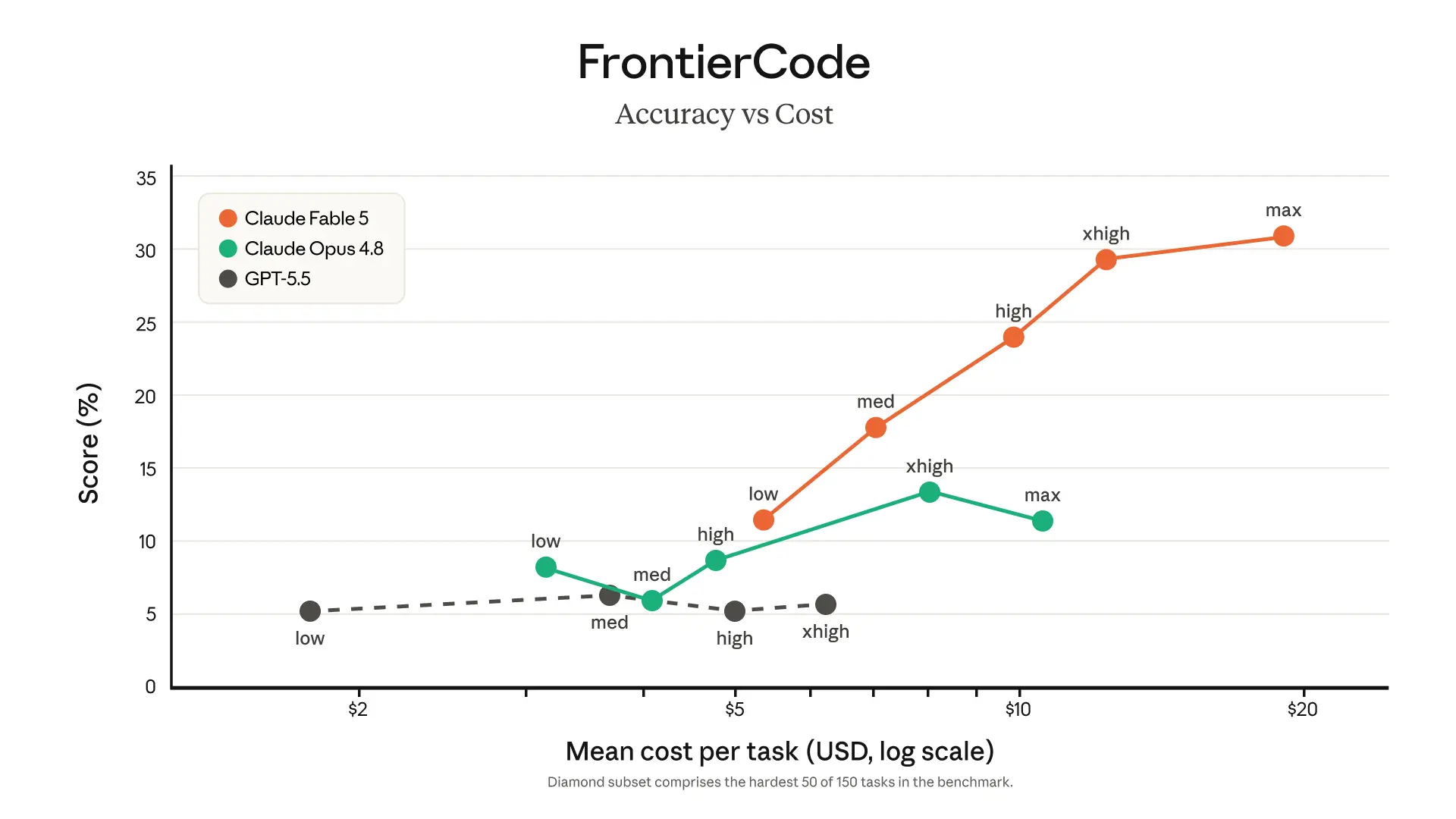
Fable 5 is now the civilian answer to the question of how to make this level of performance broadly available. According to Anthropic, the model leads on almost all evaluated benchmarks, especially in software engineering, knowledge work, and research. The longer and more complex the task, the greater its lead over previous models.
1 Million Token Context
Fable 5 and Mythos 5 feature a standard context window of one million tokens and up to 128k output tokens.
Adaptive Thinking, Always On
Adaptive thinking is the only mode. Manual thinking budgets and assistant prefill are no longer supported and will return an error.
New Tokenizer
Both models use the Opus 4.7 tokenizer. The same text generates around 30 percent more tokens than with older models. This must be factored into cost budgets.
30-Day Data Retention
On the Claude API, Fable 5 requires 30-day data retention for safety monitoring. Zero Data Retention is not available.
The core difference between the two variants lies in the guardrails. With Fable 5, requests involving cybersecurity and biology are automatically detected and rerouted to Opus 4.8. Safety classifiers evaluate prompts before and during generation. Blocked requests are not billed.
| Model | Access | Price per million tokens | Focus |
| Claude Fable 5 | All paid plans and API | $10 input / $50 output | Coding, knowledge work, agents |
| Claude Mythos 5 | Vetted Glasswing partners only | From $10 input / $50 output | Cybersecurity, biology, healthcare |
| Claude Opus 4.8 | Generally available | $5 input / $25 output | Previous top-tier model |
This puts the price at twice that of Opus 4.8. That is steep, but lower than the original Mythos pricing, which was five times as high. Teams running long, autonomous workflows should be able to offset the premium through fewer failed attempts. For routine tasks, Opus 4.8 remains the more economical choice.
Not everyone is thrilled. Parts of the community criticize the guarded variant as watered down. Critics like Gary Marcus accuse Anthropic of commercializing an allegedly too dangerous model within two months anyway. Both points are understandable. And neither changes the fact that Fable 5 is now the most powerful freely accessible model on the market.
My Conclusion
Fable 5 is no ordinary model launch. Anthropic is attempting to balance peak performance with controlled risk, and the setup using two names for a single model is precisely that: a compromise. Anyone working seriously with agents and long-horizon tasks should test Fable 5. But run the token math first. A new tokenizer, higher pricing, and mandatory data retention are not footnotes—they are decision criteria.