Claude Opus 4.6: Anthropic's Assault on the Developer Elite
New AI overtakes GPT-5.2 in coding tasks. Agent teams work in parallel. The price remains the same. Published on 5 February 2026 • AI translated
Claude Opus 4.6 is available. On claude.ai, via API, and on all major cloud platforms. Anthropic followed up just three months after Opus 4.5. The pace is remarkable.
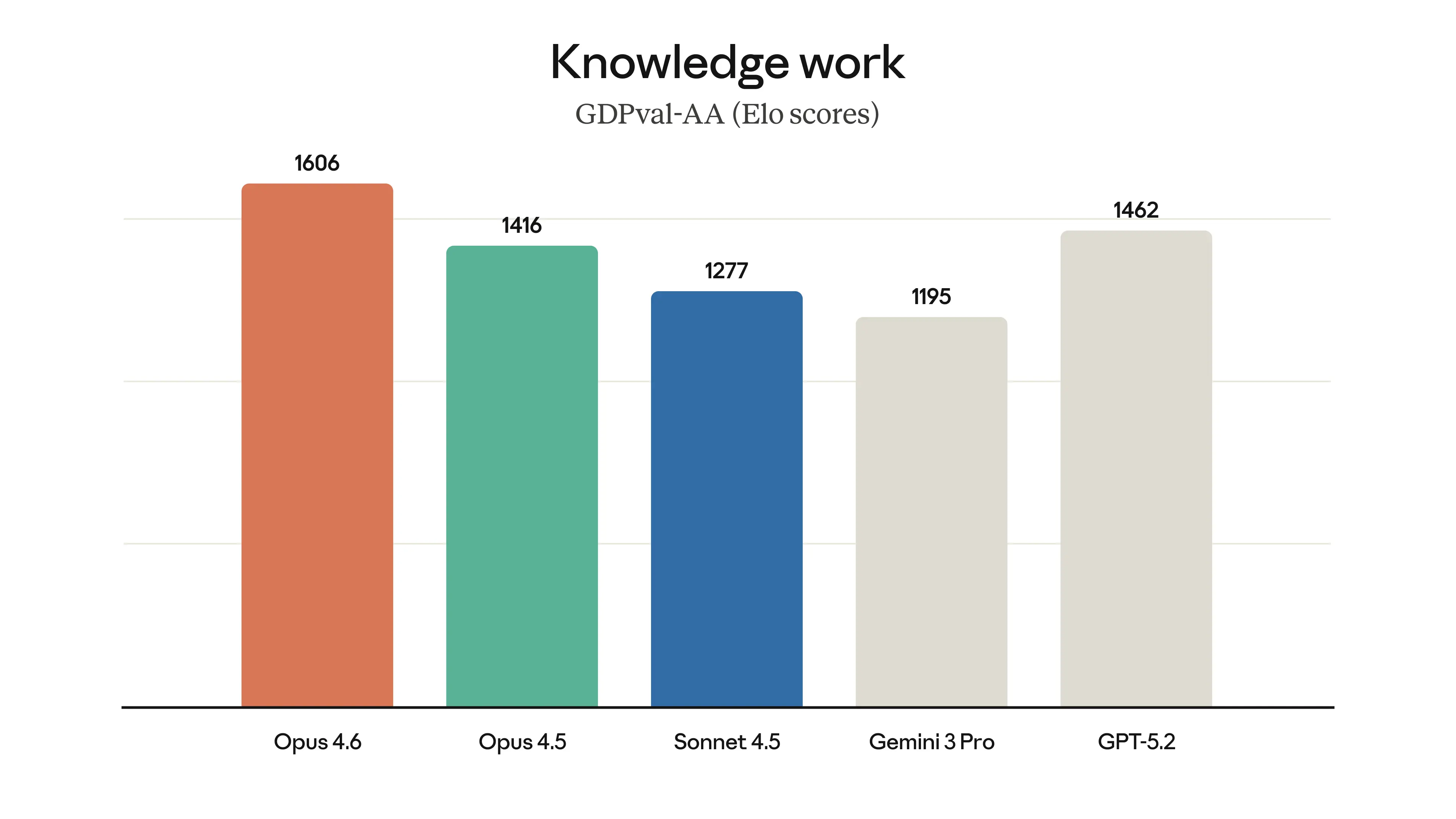
The performance figures speak for themselves. Terminal-Bench 2.0, the leading benchmark for agentic coding: 65.4%. The highest score ever recorded. On GDPval-AA, which measures real-world professional tasks, Opus 4.6 sits 144 Elo points ahead of GPT-5.2. That's not close. That's a statement.
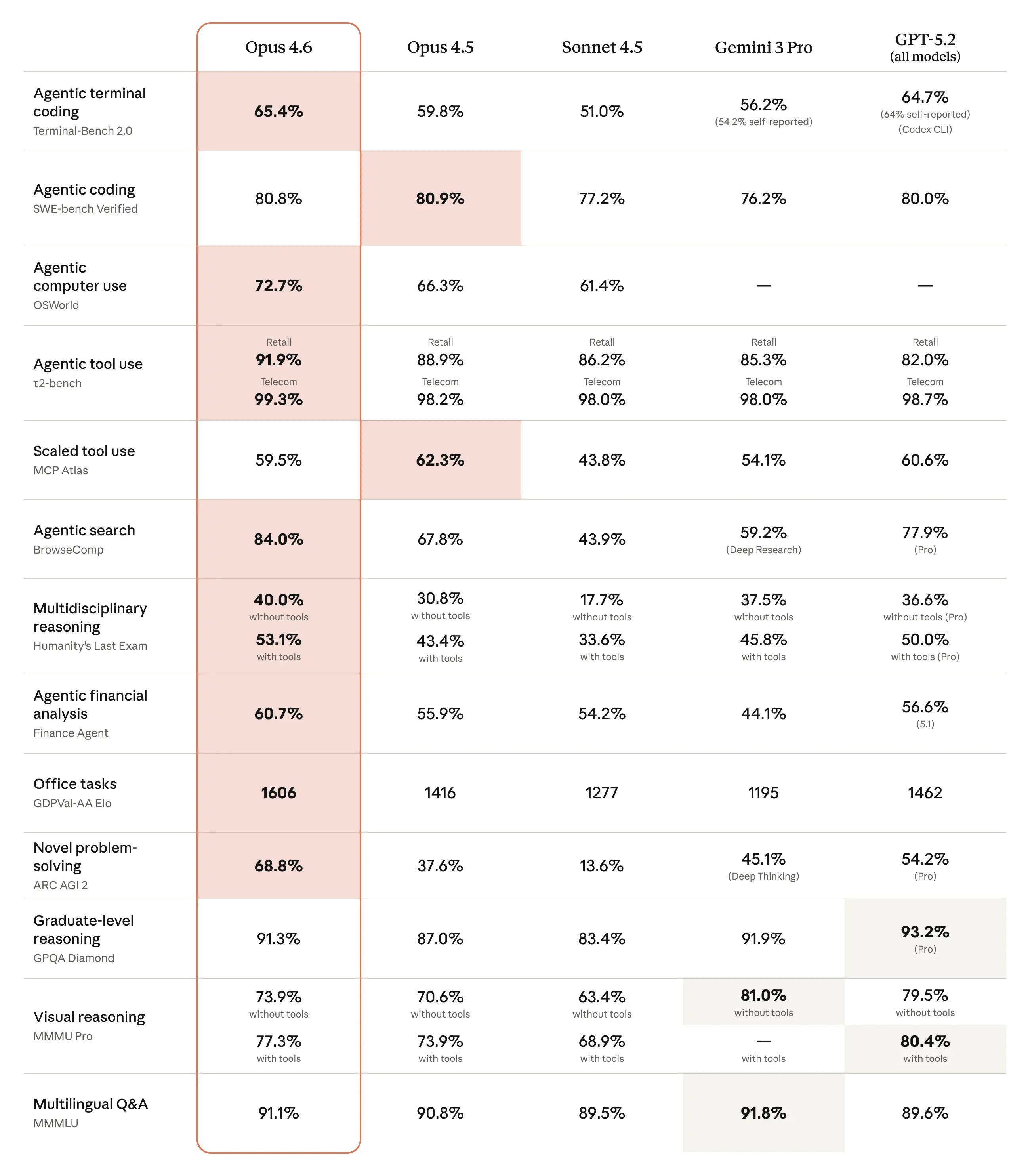
What does this mean specifically? The model plans more meticulously. It stays on track longer with complex tasks. It navigates large codebases more reliably. And it spots its own errors during code reviews. Less babysitting required.
Agent Teams: The True Revolution
Claude Code introduces agent teams. Multiple AI agents work on a project in parallel. Each takes on a part, and all coordinate autonomously. Scott White, Head of Product at Anthropic, compares it to a talented human team. Only faster.
The teams are running as a Research Preview for API users and subscribers. The advantage is obvious: instead of sequential processing, there is genuine parallelization. One agent checks security, another refactors code, and another writes tests. Simultaneously.
1M Token Context Window
Beta feature. First Opus with this capacity. Processes massive codebases and document collections without a performance drop. Premium pricing applies above 200k tokens.
Adaptive Thinking
The model decides for itself when deeper reasoning makes sense. Four effort levels: low, medium, high (default), max. Saves costs on simple tasks.
Context Compaction
Beta. Automatically summarizes older parts of conversations. Enables longer tasks without hitting limit crashes. Clever.
128k Output Tokens
Doubled from 64k. Longer thinking budgets, more comprehensive responses. SDKs require streaming for large requests.
Not Just for Devs
Opus 4.6 expands its range of applications. Financial analysis across regulatory filings, market reports, and internal data. It creates documents, spreadsheets, and presentations with fewer revision cycles. Especially relevant for industries like finance and legal, where precision counts.
Claude in PowerPoint is new. Research Preview for Max, Team, and Enterprise. The model reads layouts, fonts, and slide masters. Stays on-brand. Generates full decks or works with templates. The integration is native, with no need for export workarounds.
The Excel integration has received updates. Claude handles longer, more demanding tasks. Plans before execution. Processes unstructured data, identifying the right structure on its own. Multi-step changes in a single pass.
Early Access Partners Report
Notion: "Feels less like a tool, more like a capable coworker." GitHub: "Unlocks long-horizon tasks at the frontier." Replit: "Plans complex tasks with true precision, identifies blockers, executes tools in parallel." Asana: "Best model we've tested for AI Teammates."
Cursor: "New frontier in long-running tasks." Harvey (Legal): "90.2% BigLaw Bench score. 40% perfect scores." Box: "10% performance lift on high-reasoning tasks, 68% vs. 58% baseline." The feedback is consistent: Opus 4.6 delivers on complex, multi-step workflows.
Safety Remains a Priority
Anthropic put the model through the most comprehensive evaluation pipeline they have ever deployed. Result: Lowest rate of misaligned behaviors in the industry. Fewer over-refusals than previous models. That means it rejects benign requests less often.
New cybersecurity probes detect potential abuse. Six new methods for different threat types. In parallel, Anthropic uses the model to find and patch vulnerabilities in open-source software. Defense is being accelerated.
Pricing and Availability
$5 per million input tokens. $25 per million output tokens. Unchanged despite massive capability leaps. US-only inference costs 1.1x. Available on AWS, Google Cloud, Microsoft. API model name: claude-opus-4-6.
For premium features such as the 1M context window, premium pricing applies: $10/$37.50 per million tokens above 200k. Context Compaction and agent teams are running as Beta/Preview. Production rollout is coming.
Conclusion: Anthropic Sets the Standard
Claude Opus 4.6 is no marketing stunt. It is a substantial leap in coding intelligence, autonomy, and practical usability. Agent teams change the way AI approaches complex projects. The price remains fair.