Artificial Intelligence
The two faces of AI. Creativity and hallucinations driven by the same engine
What looks like art can turn into a dangerous misinterpretation in safety-critical moments. The common denominator is pattern recognition. Published on 19 July 2023 • AI translated
The same AI that writes you a great poem can "see" something entirely false with absolute conviction. That is not a contradiction, but a design challenge.
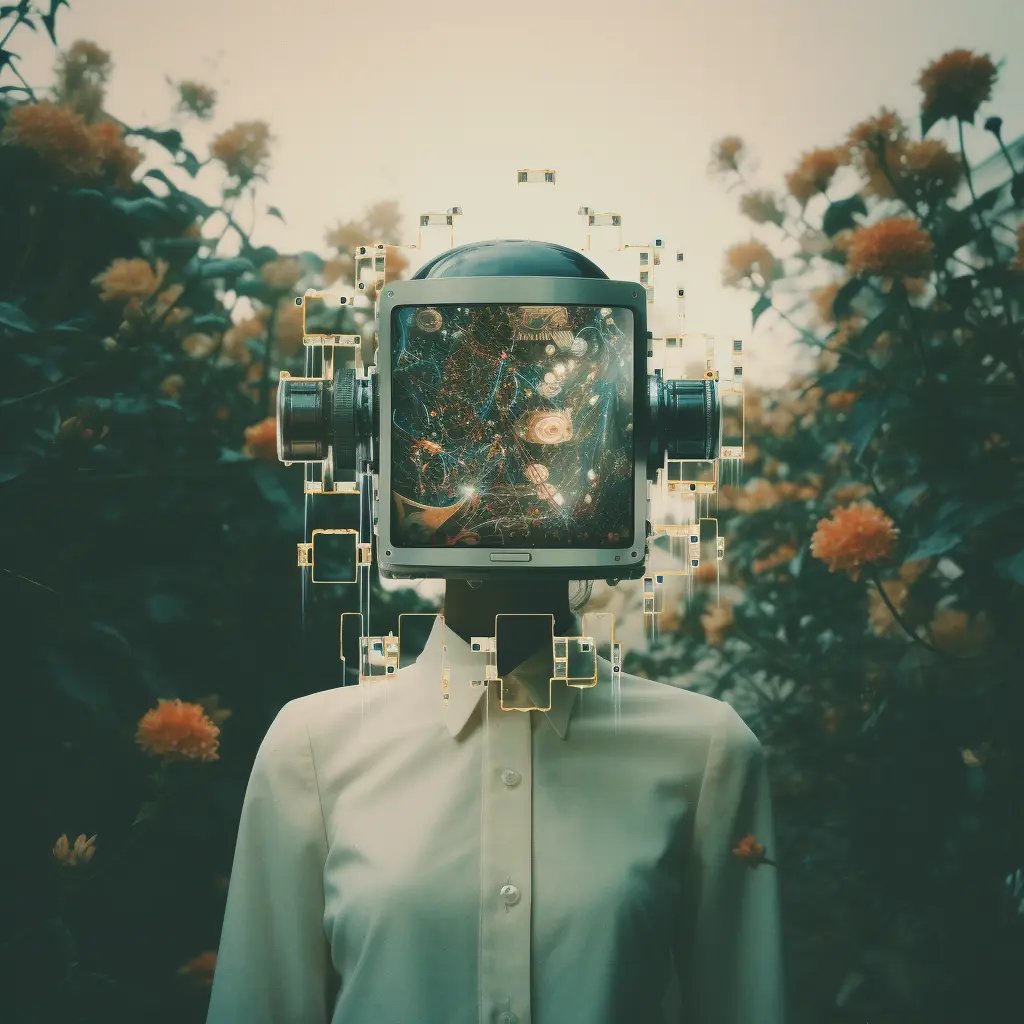 We are reaching a point where AI is expanding into autonomous mobility, content moderation, marketing, and medicine. It is precisely there that what matters is not only what is possible, but also what can go wrong. Creativity and hallucinations are two manifestations of the exact same capability.
At first glance, lumping art and false alarms together seems absurd. A model that paints or composes appears far removed from a model that randomly "detects" an object in image noise. Yet the core mechanism is the very same process. AI searches for patterns and meaning in data because it was trained to do so.
AI hallucinations refer to situations where a system detects or asserts things that are not present in the input at all. A classic visual example is a classifier that suddenly "finds" dogs, trees, or other everyday objects in random noise. This happens because the model has learned to assume structure everywhere, even when none exists. The machine errs not out of malice, but out of consistency.
The troublesome part of hallucinations is not their existence, but their timing. In safety-critical applications such as autonomous vehicles, a false perception can be disastrous. Imagine a car swerving around an imaginary obstacle, reacting in the physical world to something that only exists inside the model's head. That is precisely what trust is all about.
Countermeasures exist, but there is no silver bullet. Frequently cited methods include tuning confidence thresholds, adversarial data augmentation, and ensemble models. These approaches help reduce misinterpretations, but they cannot be trained away entirely. Especially in trust-sensitive areas like healthcare, rigorous testing, clear boundaries, and well-defined processes are essential.
The other side of the same coin appears considerably more charming. AI can be creative, ranging from novel recipe ideas to visually striking images. This happens because algorithms discover and combine surprising connections within vast amounts of data. It is more than computation; it is recombination at high speed.
A frequently cited example is AICAN. After studying over 45,000 paintings, the system developed its own visual style featuring novel compositions as well as distinctive combinations of texture and color. Technically it is not always flawless, but aesthetically it is often compelling. It demonstrates that nuance is not reserved solely for humans.
We are reaching a point where AI is expanding into autonomous mobility, content moderation, marketing, and medicine. It is precisely there that what matters is not only what is possible, but also what can go wrong. Creativity and hallucinations are two manifestations of the exact same capability.
At first glance, lumping art and false alarms together seems absurd. A model that paints or composes appears far removed from a model that randomly "detects" an object in image noise. Yet the core mechanism is the very same process. AI searches for patterns and meaning in data because it was trained to do so.
AI hallucinations refer to situations where a system detects or asserts things that are not present in the input at all. A classic visual example is a classifier that suddenly "finds" dogs, trees, or other everyday objects in random noise. This happens because the model has learned to assume structure everywhere, even when none exists. The machine errs not out of malice, but out of consistency.
The troublesome part of hallucinations is not their existence, but their timing. In safety-critical applications such as autonomous vehicles, a false perception can be disastrous. Imagine a car swerving around an imaginary obstacle, reacting in the physical world to something that only exists inside the model's head. That is precisely what trust is all about.
Countermeasures exist, but there is no silver bullet. Frequently cited methods include tuning confidence thresholds, adversarial data augmentation, and ensemble models. These approaches help reduce misinterpretations, but they cannot be trained away entirely. Especially in trust-sensitive areas like healthcare, rigorous testing, clear boundaries, and well-defined processes are essential.
The other side of the same coin appears considerably more charming. AI can be creative, ranging from novel recipe ideas to visually striking images. This happens because algorithms discover and combine surprising connections within vast amounts of data. It is more than computation; it is recombination at high speed.
A frequently cited example is AICAN. After studying over 45,000 paintings, the system developed its own visual style featuring novel compositions as well as distinctive combinations of texture and color. Technically it is not always flawless, but aesthetically it is often compelling. It demonstrates that nuance is not reserved solely for humans.
When things go well. Creative output
With high-quality training data and clear objectives, new ideas, styles, and phrasing emerge. Pattern recognition then serves a defined problem, and we label the result "creative."
When things tip over. Hallucinations
With sparse data, noisy inputs, or vague tasks, the system constructs false correlations. It "invents" structure because it was built to do so, not because it understands reality.
The point is simple: both phenomena stem from the same source—the model's drive to find patterns. The difference lies less in the model itself than in data quality, clarity of objectives, and operational controls. Provide a system with clean signals, and remarkable creativity can emerge. Feed it randomness, and it will still read meaning into it.
| **Aspect** |
**Creative Output** |
**Hallucination** |
| Trigger |
High-quality data, clear tasks |
Noise, gaps, unclear objectives |
| Value |
Novel combinations and ideas |
False conclusions stated with conviction |
| Risk |
Mostly reputational or qualitative |
Potentially safety-critical |
| Lever |
Curated training, clear guardrails |
Confidence calibration, adversarial training, ensembles |
From this follows an ethical mandate that sounds simple, yet requires real effort. Companies and researchers must investigate creativity and hallucinations together, rather than as separate topics. It demands real-world data, controlled experiments, and transparency regarding where systems are reliable and where they are not. Collaboration between industry and academia here is not a PR exercise, but a safety requirement.
Making creativity measurable
Which metrics evaluate creative quality without standardizing it to death.
Classifying hallucinations
What types exist, and which are particularly dangerous in specific contexts.
Training and data practices
What are best practices to foster creative performance while simultaneously increasing robustness.
Balancing freedom and accuracy
How much creative leeway makes sense when it comes to medicine, mobility, or moderation.
One statement from the original discussion stands out as a clear marker: it was projected that by 2025, roughly 30 percent of content could be AI-generated. Even if that figure varies depending on definitions, the trend is unambiguous. We are gaining creative machines as co-authors, not just tools. This makes it all the more critical that we understand their failure modes just as thoroughly as their strengths.
World Economic Forum (2023)
AI can catalyze and inhibit your creativity. Here is how.
Harvard Science in the News (2017)
When AI hallucinates. Understanding shortcomings in artificial neural networks.
Wired (n.d.)
AI has a hallucination problem that’s proving tough to fix.
Microsoft (n.d.)
Can artificial intelligence help you unlock creativity.
A pragmatic way forward
Creativity and hallucinations are not adversaries, but siblings. Both arise because AI seeks patterns and often finds them, even when they are merely imagined. When we carefully design data, goals, tests, and deployment boundaries, AI becomes a powerful creative partner without confabulating in critical moments.