The Turning Point: When Machines Write 80% of the Code
Andrej Karpathy on the most radical shift in 20 years of programming – and what it means for 2026 Published on 27 January 2026 • AI translated
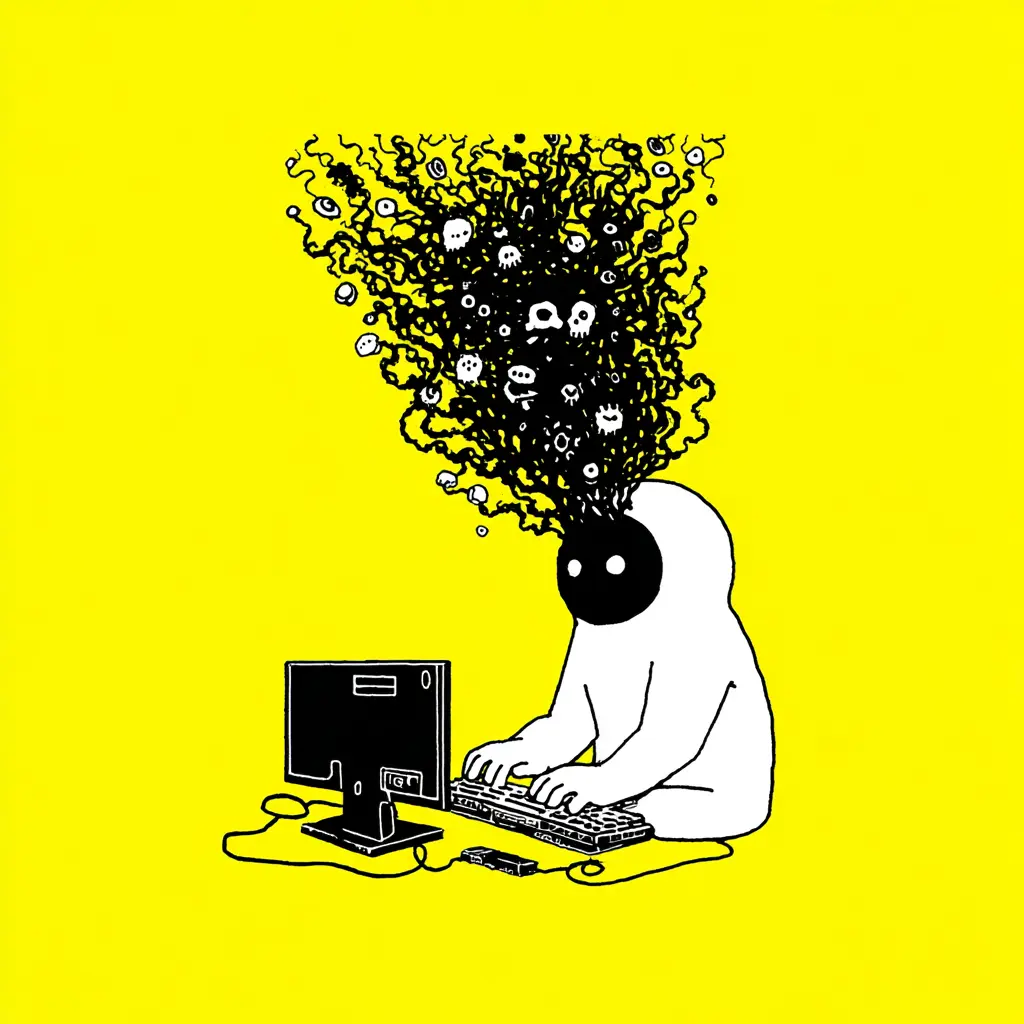
Karpathy describes a fundamental shift. As recently as November, he was writing 80% of his code himself, supported by autocomplete. He delegated 20% to AI agents. In December, that ratio completely flipped. Now agents write 80% of the code. He himself only handles adjustments and quality checks.
The result? He primarily programs in English. He explains to the machine in words what it should code. It's a blow to the ego, he admits. But the ability to move software in large "code actions" is too valuable to pass up.
"This is the single biggest change to my workflow in ~20 years of programming," Karpathy says. "And it happened in just a few weeks."
The Reality: Bugs, Bloat, and Too Much Politeness
Karpathy is no naive optimist. He warns against the hype surrounding "no IDE needed anymore" and "agent swarms." The models still make mistakes. But the nature of those mistakes has changed.
They used to be syntax errors. Today, they are subtle conceptual bugs. Mistakes that a hasty junior developer would make. The models make incorrect assumptions. They don't manage their own confusion. They don't ask follow-up questions. They don't surface tradeoffs. And they are too polite to push back when they should.
Overcomplication
The agents tend to bloat code and APIs. They implement inefficient constructs across 1,000 lines when 100 would suffice. Only when asked, "Couldn't you make this simpler?", do they drastically reduce it.
Side Effects
Sometimes the models alter or delete comments and code they don't understand. Even when it has absolutely nothing to do with the current task. This happens despite clear instructions in CLAUDE.md.
Lack of Cleanup
Cleaning up after themselves? Not a chance. Dead code is left behind. Abstractions are not refactored. The human has to monitor and correct.
Still a Net Win
Despite all these issues: It represents massive progress. Going back to manual programming? Hard to imagine. Karpathy works with a few Claude Code sessions on the left in the terminal and an IDE on the right for code reviews and manual edits.
The "AGI Feeling": Boundless Persistence
What fascinates Karpathy the most? The persistence of the agents. They don't get tired. They don't get demoralized. They keep trying, even where a human would have given up long ago.
He describes watching an agent work on a problem for 30 minutes. And then triumph. "It's a 'feel the AGI' moment," he says. "You realize that persistence is a core bottleneck for work. With LLMs, that persistence has increased dramatically."
Speedup or Expansion? Both.
How do you measure the "acceleration" from LLM assistance? Karpathy finds no clear-cut answer. He feels faster. But the main effect is different: He accomplishes far more than he originally planned.
Why? First: He can now code things that previously wouldn't have been worth the effort. Second: He can touch code he previously would have avoided due to knowledge or skill gaps.
So it's not just speedup. It's expansion.
Leverage: From Imperative to Declarative
The real magic happens when you send the AI agent into a loop. Not telling it what to do, but defining success criteria and watching it work.
Karpathy recommends: Have the agent write tests first. Then write the code that passes them. Connect it to a browser via MCP. First write the naive algorithm that is correct. Then have it optimize without losing correctness.
The strategy: Shift from imperative to declarative. That way, the agent runs longer and delivers more leverage.
More Fun, Less Routine
Surprisingly, programming with agents is more fun. Why? The monotonous "fill in the blanks" work drops away. What remains is the creative part.
Karpathy feels less blocked. He has more courage, because there is almost always a path forward hand-in-hand with the agent.
Warning, though: Not everyone shares this view. AI-assisted coding will divide engineers: into those who primarily loved coding, and those who primarily loved building.
The Flip Side: Skill Atrophy
Karpathy observes a troubling side effect. His ability to write code by hand is slowly withering.
Generation (writing code) and discrimination (reading code) are different skills in the brain. Because of all the small, mostly syntactic details, you can review code effectively even while struggling to write it yourself.
This serves as a warning for the entire industry. What happens when a generation of engineers grows up having never learned to write code from scratch?
The Slopacolypse Is Coming
Karpathy warns: 2026 will be the year of the "Slopacolypse." Everywhere—GitHub, Substack, arXiv, X, Instagram, across digital media—AI-generated slop will take over.
We will also see much more AI-hype productivity theater alongside authentic, real improvements. The challenge will be separating the two.
The Big Questions for 2026
Karpathy raises questions that should concern the entire industry:
The 10X Engineer
What happens to the productivity ratio between average and top engineers? It is possible that this gap will widen significantly.
Generalists vs. Specialists
Will generalists using LLMs increasingly outperform specialists? LLMs are much better at "fill in the blanks" (micro) than at broad strategy (macro).
The Feel of the Future
What will LLM coding feel like in the future? Will it feel like playing StarCraft? Factorio? Making music?
Societal Bottleneck
How much of society is bottlenecked by digital knowledge work? And what happens when that bottleneck disappears?
Conclusion: A Phase Shift Is Here
Karpathy draws a clear conclusion: LLM agent capabilities (especially Claude and Codex) crossed a coherence threshold of sorts in December 2025. That has triggered a phase shift in software engineering.