OpenAI Sites: The missing link has arrived
Codex now builds websites and hosts them at the same time. What this really means, and where the catch lies. Published on 5 June 2026 • AI translated
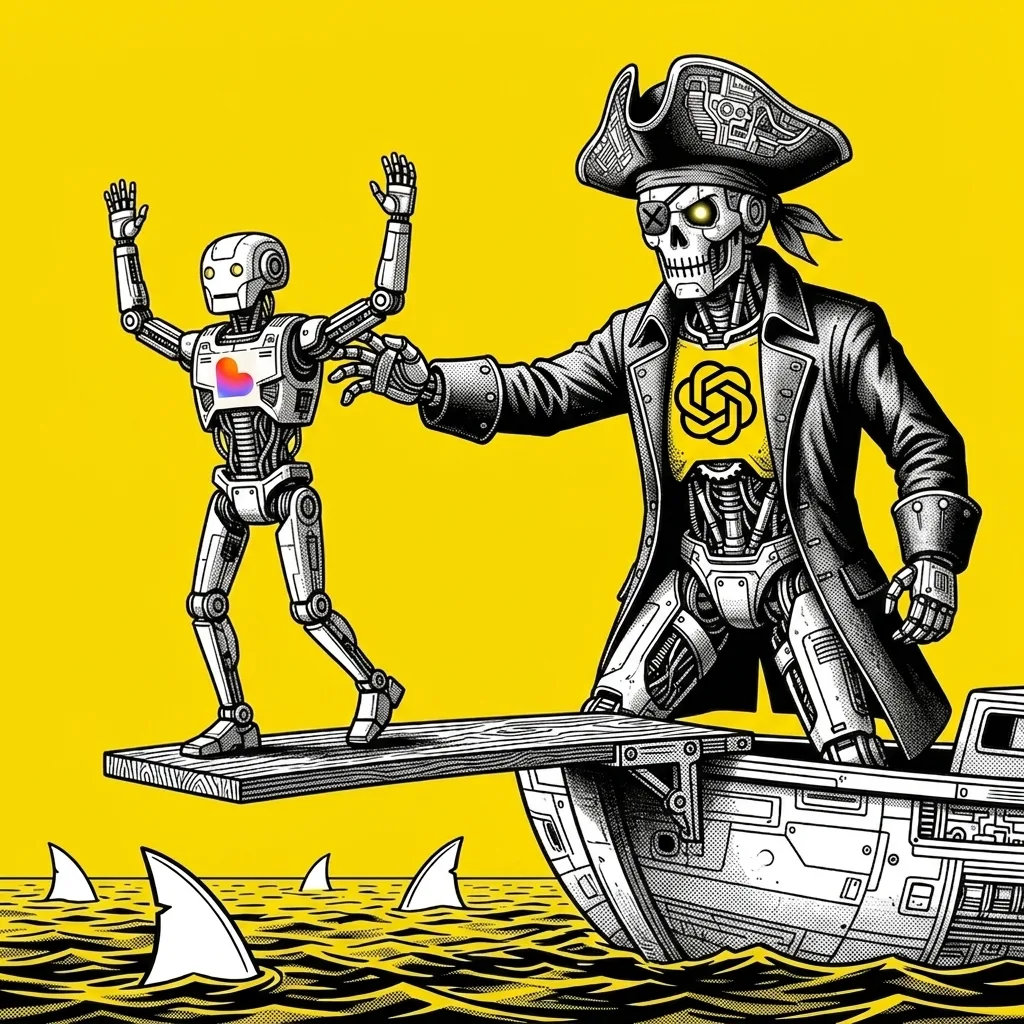
The real leap is not the building. Many tools could already do that. The leap is the hosting. Sites closes the missing link between an idea and a running site. One URL, one click, live.
I had the same experience in December. A new website, an unmanaged VPS running Ubuntu, set up from scratch via AI. My first time. What previously commanded a respectful distance was suddenly a matter of hours. Exactly this barrier to building your own site is now falling even further.
And yes, this looks like a frontal assault. On tools like Lovable, on any agency that could previously hide behind technical complexity. But before we declare victory, it is worth taking a second look at what OpenAI actually shipped.
What it is
A Codex plugin that builds dashboards, planners, project boards, and lightweight tools. Hosted by OpenAI on Cloudflare Worker infrastructure, using D1 and R2 for storage.
Who can use it
Preview, ChatGPT Business and Enterprise only. On Enterprise, an admin must enable it via role permissions. Solo on a personal plan: not yet today.
What it is built for
Internal and team-internal tools. Save then deploy, with a review step beforehand. Strong for workspaces. Not positioned as a public marketing site builder.
Here lies the honest catch. Sites hosts on an OpenAI address, not on your own domain. It is limited to Business and Enterprise. And it is geared toward internal tools, not the public site that a stranger finds, trusts, and uses to contact you.
Anyone who genuinely wants a public website would currently look more toward the ChatGPT apps from Wix, launched in March 2026, or Jimdo, launched in February 2026. Those spit out a real, editable builder page.
The numbers show why OpenAI is taking this path. Codex has over 5 million weekly users, up more than 6x since February 2026. Non-developers make up around 20 percent and are growing about 3x faster than developers. OpenAI wants knowledge workers, not just engineers.
| What you need | OpenAI Sites | Public Builder |
| Public customer-facing site | Hosts on OpenAI URL, Business and Enterprise only | Public by default, custom domain possible |
| Hosting included | Yes, by OpenAI | Yes |
| Edit live | Re-prompt and deploy | Directly on the page |
| Best fit | Internal dashboards and team tools | Public professional presence |
My point still stands regardless. Generation has become a given. The exciting question is no longer whether AI can build a site. It is what comes after the draft: hosting, a real URL, a contact form, analytics, search visibility.
That is precisely where the wheat separates from the chaff. Today, Sites is brilliant for internal tools. For a public business card, it is not yet the shortest path. That is not a flaw, just a different job.
The barrier drops, the standards rise
OpenAI Sites moves the bar. Building is solved, hosting is solved, the overhead disappears. For agencies, this does not mean the end, but the end of using complexity as an excuse. Anyone charging money in the future is no longer selling the setup. They are selling judgment, niche expertise, maintenance, and a site that looks like you and works for you. Precisely what AI cannot take off your plate today.